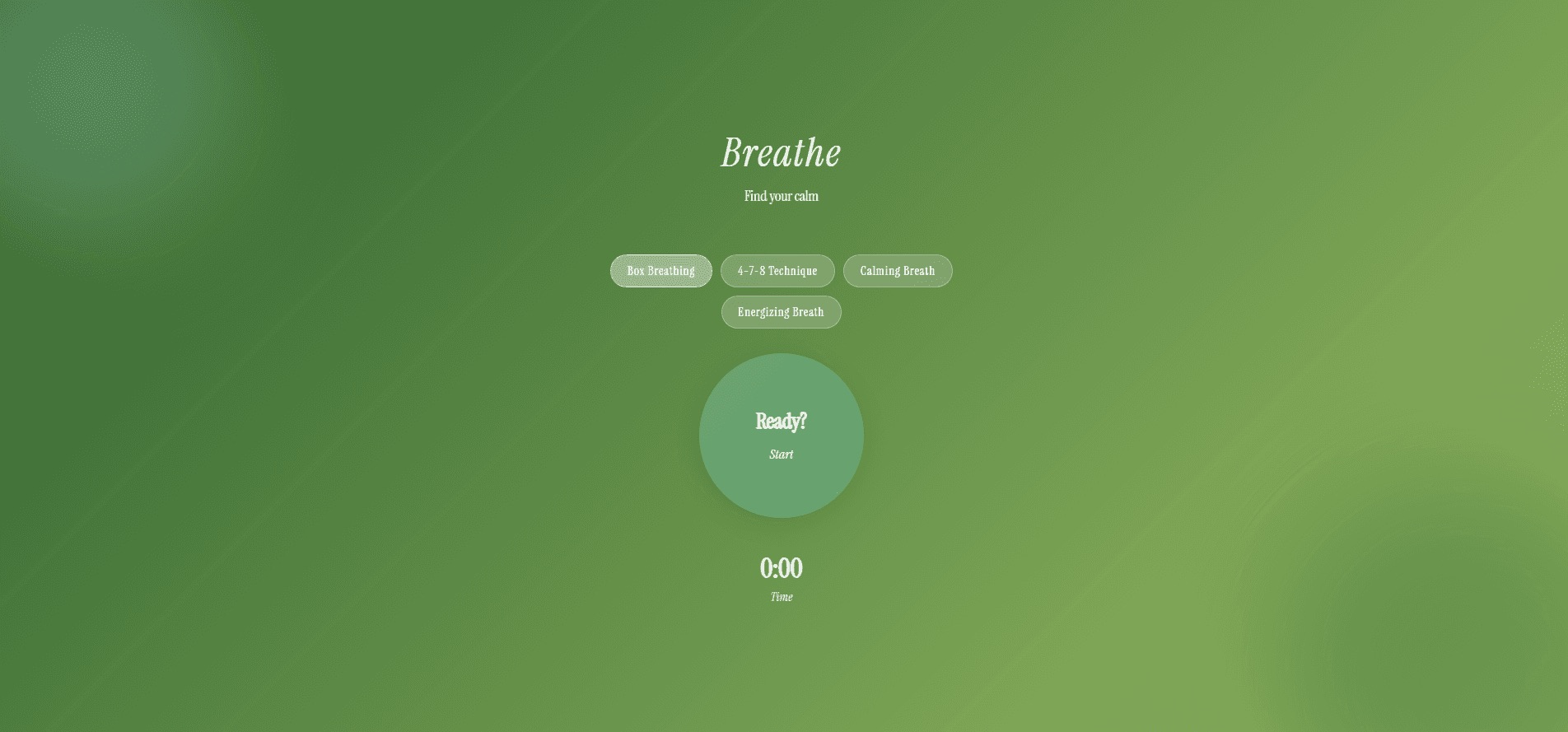
A self-directed breathing app designed to help people find calm in under a minute. It's currently being used by Minneapolis-based therapists and their clients. I owned the full experience — content strategy, microcopy, information architecture, and front-end build — using AI as a development partner to ship a polished tool solo.
Use the app for free ↗
Onboarding flows, account walls, and dense technique menus create friction at exactly the moment someone is reaching for calm. I wanted to test a hypothesis: that thoughtful content design, not more features, is what makes a wellness tool usable. The problems I set out to solve:
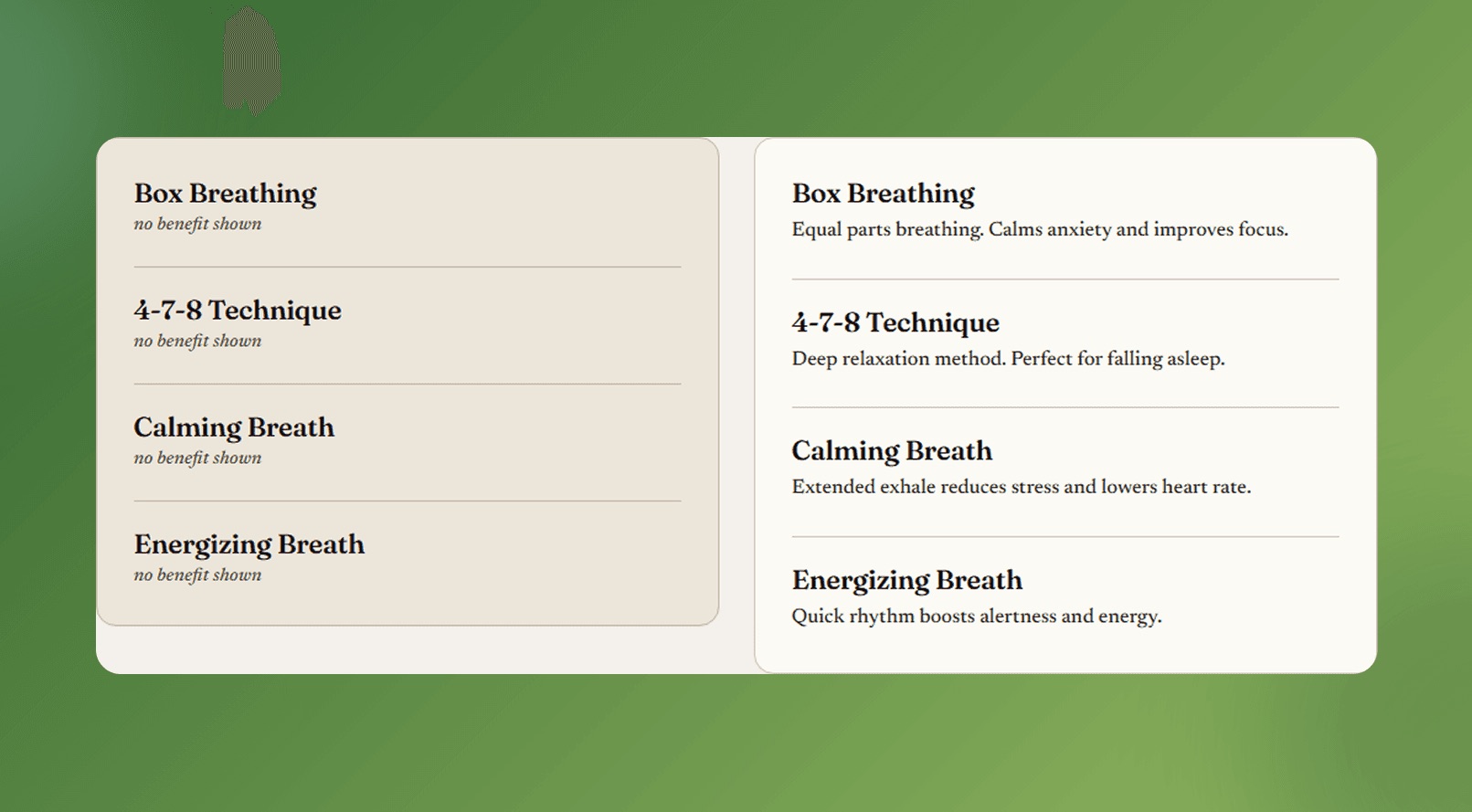
Working solo without a research budget, I grounded decisions in established breathing science and content design principles, then pressure-tested the copy against real emotional scenarios: "I'm anxious right now, which one do I pick?" "I'm lying in bed trying to fall asleep." "I need to focus before a meeting." For each, I asked whether the labels and descriptions answered the user's real question — what will this do for me?
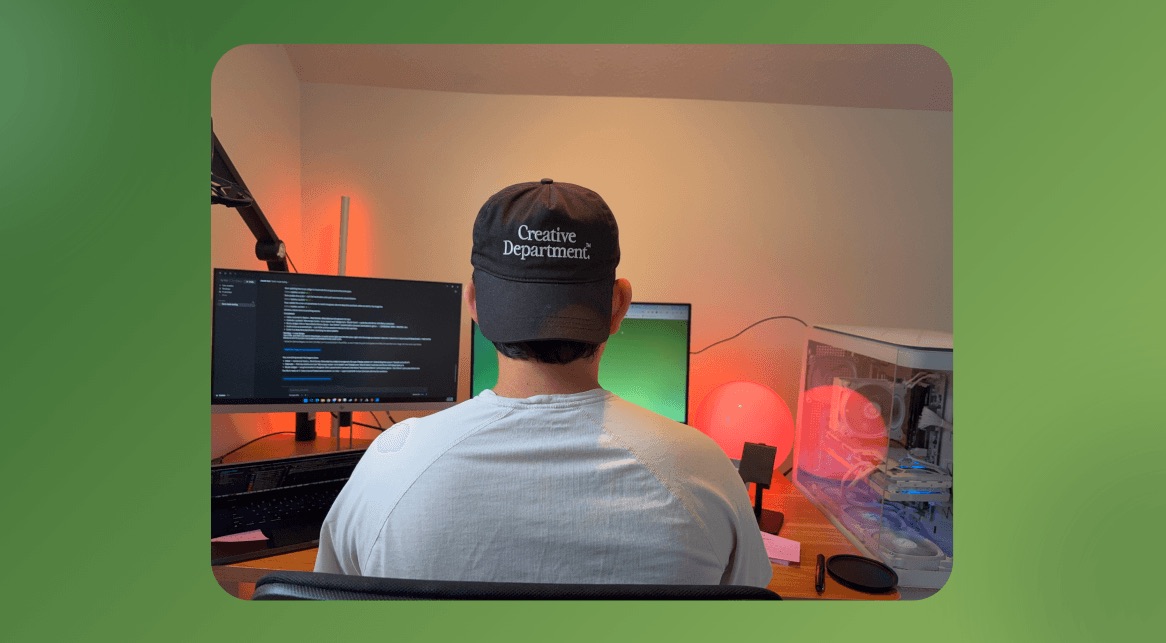
I used Claude Code as a hands-on development partner, which let me move from concept to a working, deployed app as a one-person team. The collaboration was deliberate, not hands-off: I directed the architecture and made every content and UX decision, while using AI to speed up the build, debug, and iterate on the front end. This mirrors how I think AI should work in practice — supporting human judgment, with a human owning the calls that matter. It's the same approach I bring to content systems at scale: AI handles speed, the designer owns intent and quality.
This project shows two things I care about as a content designer: that content design can carry an entire product experience, and that AI lets one person own that experience end to end without sacrificing craft.
By turning clinical techniques into benefit-led language and removing every barrier to the first breath, I built a tool that works in the exact moment of stress it's designed for.
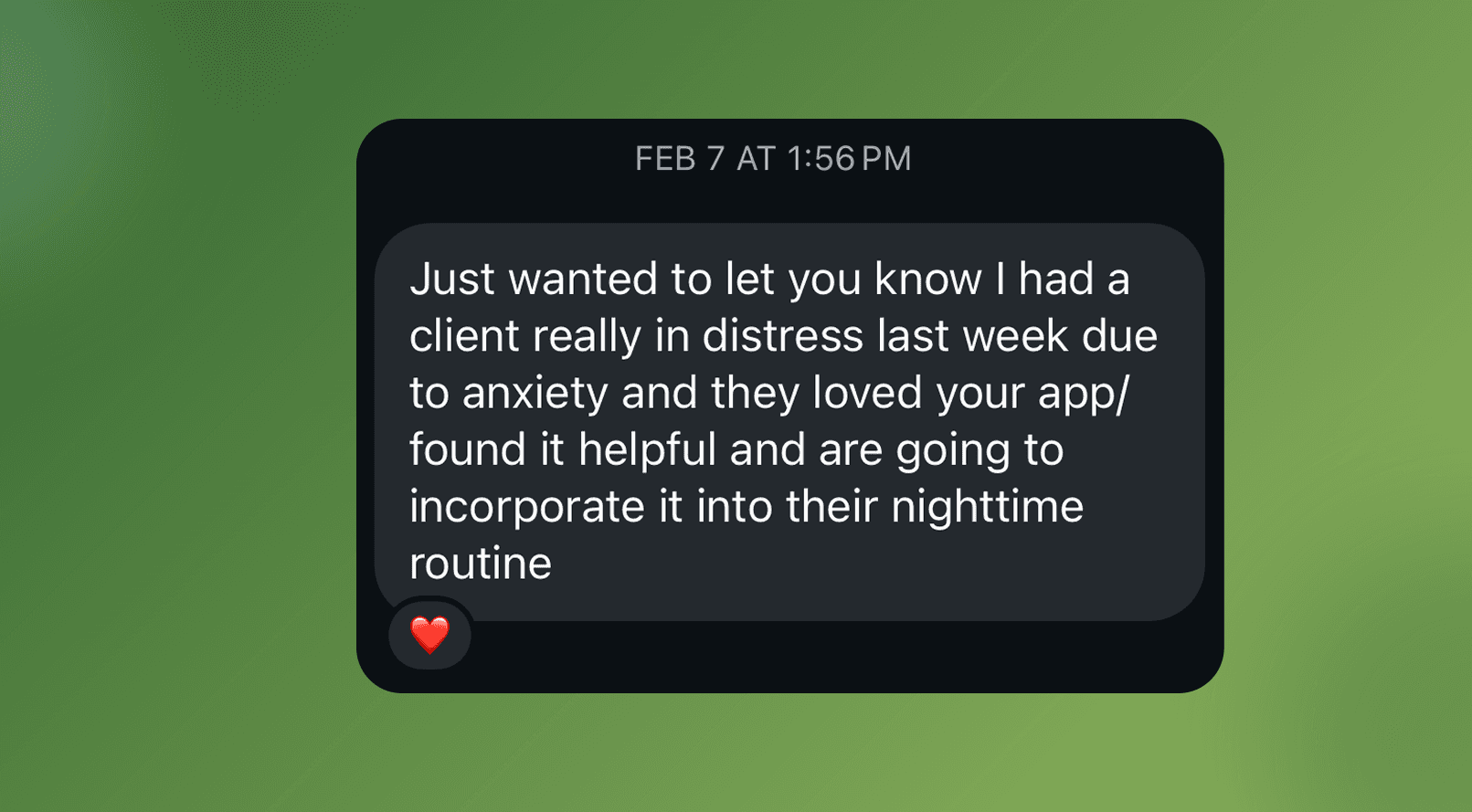
The best sign came on its own: a therapist told me one of her clients now uses the app every night to wind down for sleep. For a tool meant to help people in hard moments, someone using it as part of their nightly routine is the proof that matters most.